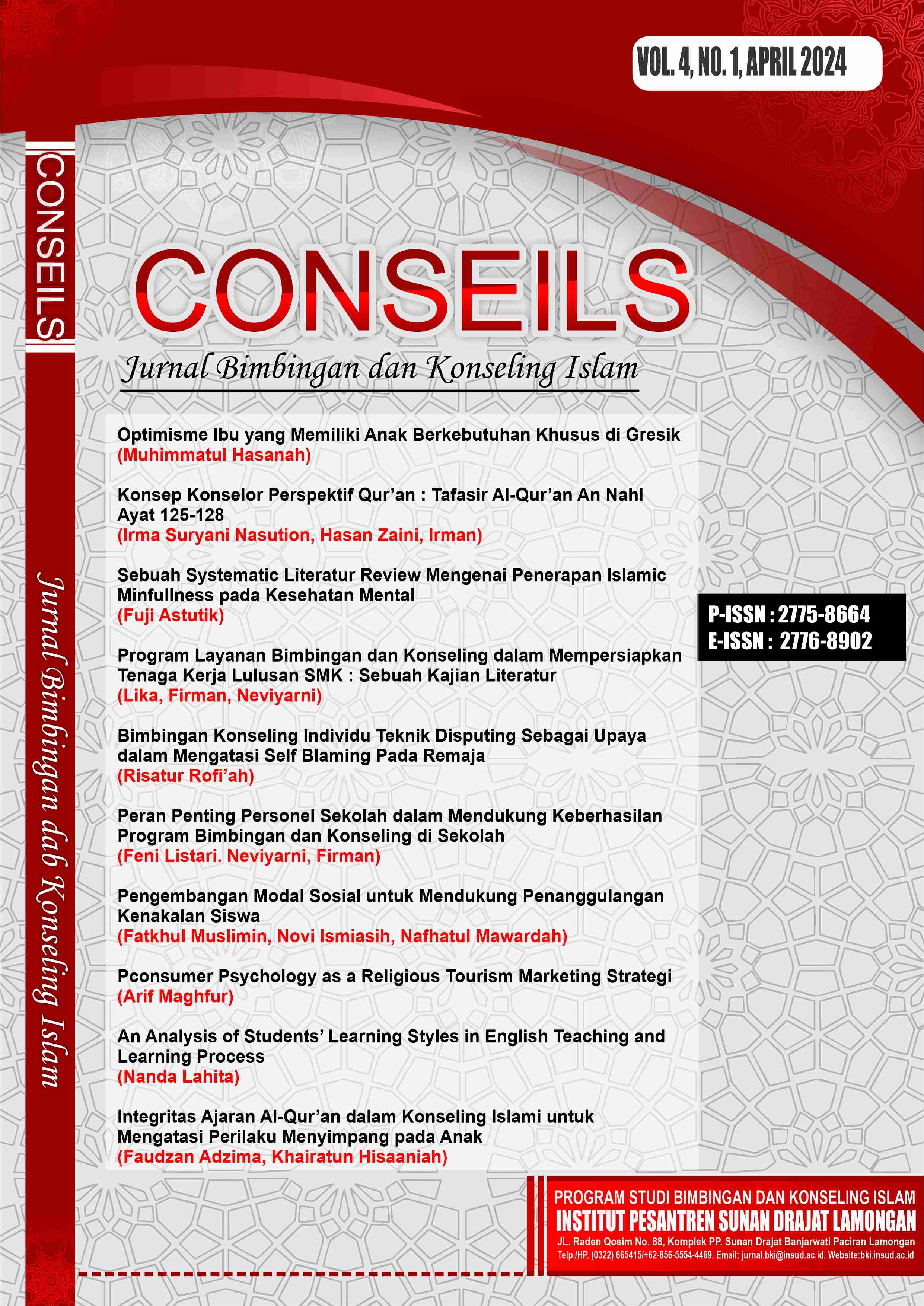
KONSELING INDIVIDU TEKNIK DISPUTING SEBAGAI UPAYA DALAM MENGATASI SELF BLAMING (MENYALAHKAN DIRI) PADA REMAJA
DOI:
https://doi.org/10.55352/bki.v4i1.1002Keywords:
individual counseling, disputing techniques, self blamingAbstract
Self blaming is an emotional awareness that every individual has which includes anger, sadness, embarrassing circumstances, despair, when making mistakes that are inflicted by oneself. In general, self-blaming occurs in adolescents. This is because adolescents have unstable emotions. Adolescents who are less able to accept comments from their environment will tend to blame themselves (self-blaming). If self-blaming is not addressed immediately, this will result in low self-esteem and physical disorders.
Efforts made to overcome self-blaming are through individual counseling of disputing techniques. one of the theories of Rational-Emotive Therapy (RET) which follows the pattern of the A-B-C theory, emphasizes that problematic behavior is caused by a person's thinking, namely irrational thinking so that the focus of handling this approach is on the individual's thinking and focuses on how the human being thinks, assesses, decides, analyzes, and acts.
This study uses a qualitative research method with the type of case study research. The data collection is carried out through interviews, observations, and documentation. Meanwhile, the data analysis technique used is comparative descriptive by comparing theoretical and field data and results before and after counseling is carried out.
The results of this study show that there is a change in the counselor's self, namely in the form of self-blaming symptoms which are characterized by a change in a more rational mindset.
References
Haris, Herdiansyah. 2011. Metode penelitian kualitatif Untuk Ilmu-ilmu Sosial, Jakarta: Salemba Humanika
Hasan, M. Iqbal. 2002. Pokok-pokok Materi Metode Penelitian dan Aplikasinya. Jakarta: Ghalia Indonesia.
Hasnida, Namora, L.L, Konseling Kelompok, Jakarta: Prenadamedia, 2016.
Iman, W. (2009). Hubungan Antara Perilaku Seksual Dengan Rasa Bersalah (Guilty Feeling) Pada Remaja Di Kelurahan Bojongsari Sawangan Depok. Universitas Islam Negeri (UIN) Syarif Hidayatullah Jakarta.
Kristiani, L. N., Saman, A., & Jaya, P. (2022). Efektifitas pendekatan rational emotive behavioural therapy mengatasi kecemasan sosial dengan teknik dispute kognitif di smk gamaliel 1 madiun jawa timur. Jurnal Pemikiran Dan Pengembangan Pembelajaran, 4(1), 330-336.
Laily, E. S. N., & KHAIRI, A. M. (2020). Pengaruh body shaming terhadap self blaming pada remaja di Karang Taruna Perumnas Ngembat Asri Gemolong (Doctoral dissertation, IAIN SURAKARTA).
Moleong, L. J. (2007. Metode penelitian kualitatif. Bandung: remaja rosdakarya
Prayitno dan Erman Amti. (2004). Layanan bimbingan dan konseling kelompok. Padang: Jurusan Bimbingan dan Konseling Fakultas Ilmu Pendidikan Universitas Negeri Padang.
Sugiyono. 2008, Metode Penelitian Kuantitatif Kualitatif dan R&D. Bandung :CV. Alfabeta,.
Widjast, E. P. (2011). Hubungan Antara Self-Criticism Dengan Distres Pada Siswa Sma Negeri 3 Surakarta.
Zuama, H. . S. N. (2011). Hubungan Antara Konsep Diri Dengan Strategi Coping Pada Mahasiswa Angkatan 2009 Program Studi PG PAUD FKIP Universitas Tadulako. 41–51.